


Thomas Edison is one of the most celebrated inventors in history, renowned for his resilience, determination, and unparalleled ingenuity. His most famous invention, the incandescent light bulb, revolutionized the world, but the journey to success was anything but easy. Edison’s path was filled with thousands of failed experiments, each one bringing him closer to the discovery that would change history. His story is an enduring testament to perseverance, innovation, and the power of a never-give-up attitude.
The Early Life of Thomas Edison
Born in 1847 in Milan, Ohio, Edison had a curious mind from an early age. However, his formal education was limited—he attended school for just a few months before his mother decided to homeschool him. His relentless curiosity led him to experiment with chemistry and mechanics, setting the foundation for his future as an inventor.
The Road to Invention: A Journey of Trial and Error
Failure is Just Another Step Towards Success
One of the most inspiring aspects of Edison’s story is his belief that failure is not a defeat but a stepping stone toward success. When working on the incandescent light bulb, he reportedly conducted 10,000 experiments before finally achieving the breakthrough. Instead of viewing these failures negatively, Edison famously stated:
“I have not failed. I’ve just found 10,000 ways that won’t work.”
This mindset defined his career and made him a symbol of persistence in the face of adversity.
The Invention of the Light Bulb
While many people mistakenly credit Edison as the sole inventor of the light bulb, the truth is more complex. Several inventors had experimented with electric lighting before him. However, Edison’s genius lay in refining the technology, making it commercially viable by improving the filament’s durability and ensuring long-lasting illumination.
Edison’s team at Menlo Park Laboratory conducted thousands of tests on different filament materials, including bamboo, carbonized paper, and platinum. Eventually, they discovered that a carbon filament inside a vacuum-sealed bulb could produce long-lasting light. This discovery paved the way for widespread electrical illumination and transformed modern society.
The Power of Resilience: Edison’s Other Notable Failures
The Automatic Vote Recorder
Edison’s first patented invention, the automatic vote recorder, was designed to speed up the voting process in legislative chambers. However, politicians were not interested, as they preferred the slower, manual process that allowed for last-minute vote changes. This rejection taught Edison a valuable lesson: success isn’t just about innovation—it’s also about meeting market demand.
The Electric Pen
Another failed invention was the electric pen, designed to make duplicating documents easier. While the concept was innovative, the pen’s mechanics were flawed, and it never gained popularity. However, this failure contributed to the later development of the mimeograph machine, an early version of the photocopier.
The Edison Talking Doll
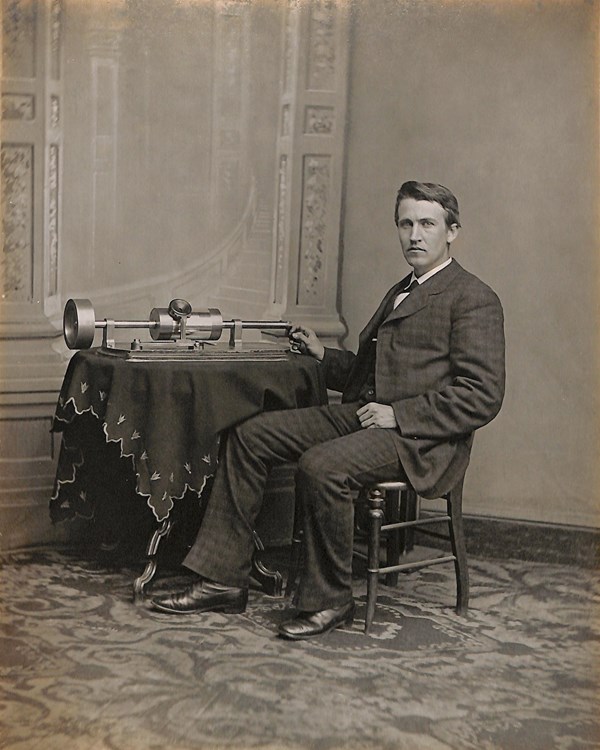
Edison attempted to merge his phonograph invention with a toy doll to create the Edison Talking Doll. Unfortunately, the doll’s voice recordings were unsettling, and the toy was too expensive for mass adoption. Despite this setback, the phonograph itself would later become one of Edison’s greatest achievements.

Lessons from Edison’s Perseverance
1. Failure is a Learning Process
Edison viewed failure as an essential part of innovation. Each experiment provided valuable data, bringing him closer to his goal. Entrepreneurs and inventors today can learn from his approach by embracing setbacks as opportunities for growth.
2. Hard Work and Persistence Pay Off
Edison was known for his relentless work ethic, often working 16-20 hours a day. His philosophy was simple: “Genius is 1% inspiration and 99% perspiration.” Success rarely comes overnight, and those willing to put in the effort are more likely to achieve their goals.
3. Adaptability is Key
Many of Edison’s early failures stemmed from misjudging market needs. He learned to adapt his inventions to public demand, ensuring their commercial success. This adaptability is crucial in today’s fast-changing world.
Edison’s Lasting Impact on the World
Beyond the light bulb, Edison’s inventions shaped modern life in numerous ways:
- Phonograph: Paved the way for recorded music.
- Motion Picture Camera: Revolutionized the entertainment industry.
- Electric Power Distribution System: Enabled widespread use of electricity.
His impact is still felt today, as his work laid the foundation for technological advancements that continue to shape the world.
Conclusion
Thomas Edison’s journey was not one of instant success but of relentless perseverance and innovation. His story is a powerful reminder that failure is not the opposite of success—it is a crucial part of it. By embracing failure, learning from mistakes, and persistently pushing forward, anyone can achieve greatness.


