


Success is not just about intelligence or talent; it is largely influenced by one’s mindset. The growth mindset and the fixed mindset determine how individuals approach challenges, handle failures, and strive for improvement. Understanding the key differences between these mindsets can unlock the potential for personal and professional growth.
What is a Growth Mindset?
A growth mindset, a concept popularized by psychologist Carol Dweck, is the belief that abilities and intelligence can be developed through effort, learning, and persistence. People with a growth mindset view challenges as opportunities, embrace feedback, and see effort as the pathway to mastery.
Characteristics of a Growth Mindset
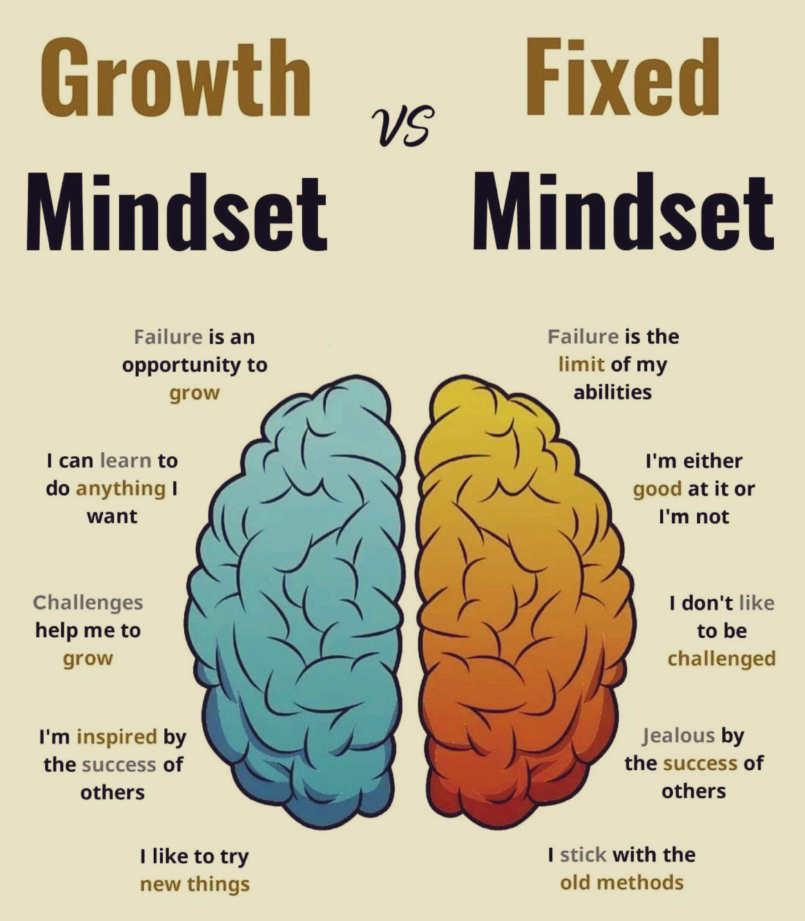
- Embraces challenges instead of avoiding them
- Learns from criticism rather than being defensive
- Persists despite obstacles rather than giving up easily
- Finds inspiration in others’ success instead of feeling threatened
- Sees effort as the key to mastery rather than proof of inadequacy
What is a Fixed Mindset?
A fixed mindset is the belief that intelligence and abilities are static and cannot be changed. People with this mindset often avoid challenges, give up easily, and feel threatened by others’ success. This mentality can limit personal growth and achievement.
Characteristics of a Fixed Mindset
- Avoids challenges due to fear of failure
- Ignores feedback and criticism
- Feels threatened by others’ success
- Believes intelligence is fixed and unchangeable
- Gives up easily when faced with setbacks
The Impact of Mindset on Success
The difference between success and stagnation often lies in the mindset we adopt. A growth mindset fosters resilience, enabling individuals to keep striving for improvement, while a fixed mindset creates barriers to progress.
Case Study: How a Growth Mindset Transforms Success
Consider Michael Jordan, one of the greatest basketball players in history. He was cut from his high school basketball team, yet instead of giving up, he used it as motivation to work harder. His dedication and relentless practice exemplify the power of a growth mindset.
How to Develop a Growth Mindset
1. Embrace Challenges
Rather than shying away from difficult situations, tackle them head-on. Every challenge provides an opportunity to learn and grow.
2. View Failure as a Learning Experience
Failure is not the opposite of success; it is part of the journey. Learn from mistakes and use them as stepping stones toward improvement.
3. Cultivate a Love for Learning
Seek out new knowledge, read books, take courses, and continuously improve your skills.
4. Surround Yourself with Growth-Oriented People
Being around individuals who encourage self-improvement and resilience can help reinforce a growth mindset.
5. Reframe Negative Thoughts
Instead of saying, “I’m not good at this,” shift to, “I’m not good at this yet, but I can improve with effort.”
6. Accept and Act on Constructive Feedback
Feedback helps identify areas for improvement. Instead of feeling discouraged, use it to grow.

Growth Mindset in Education and the Workplace
In Education
Students with a growth mindset tend to perform better because they believe their abilities can improve with effort. Teachers can cultivate this mindset by praising effort rather than intelligence.
In the Workplace
Employees who embrace a growth mindset are more likely to adapt to changes, seek opportunities for learning, and persevere through challenges. Companies that encourage this mindset experience higher innovation and productivity.
Common Myths About Growth Mindset
1. “A Growth Mindset Means Effort Alone Leads to Success”
While effort is important, success also requires strategies, learning from mistakes, and seeking help when needed.
2. “You Either Have a Growth Mindset or You Don’t”
Mindset is not fixed. It can be developed with conscious effort and practice.
3. “Having a Growth Mindset Eliminates Failure”
Failure is an essential part of growth. A growth mindset helps individuals learn from failure rather than fear it.
Conclusion
Adopting a growth mindset is one of the most powerful ways to achieve long-term success. By embracing challenges, learning from failures, and continuously improving, individuals can unlock their true potential. Whether in education, business, or personal life, a growth mindset fosters resilience, innovation, and progress.


